
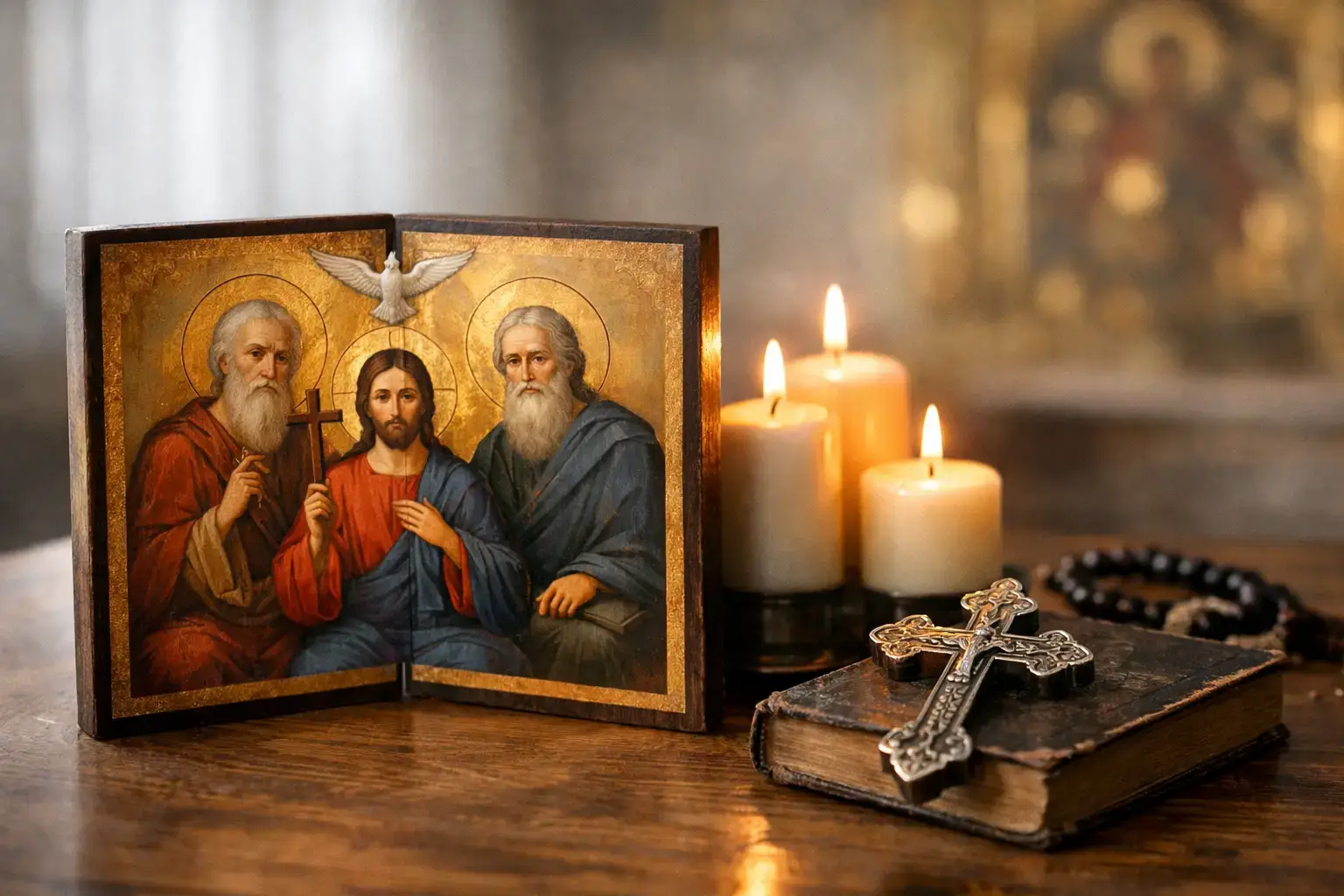
If you have ever asked what is orthodox trinitarian theology, you are really asking one of the most personal questions in the Christian faith – who is God, and how does God relate to us? This is not only a doctrine for theologians or church leaders. It shapes prayer, worship, belonging, discipleship, and the way Christians understand grace in everyday life.
Orthodox trinitarian theology is the Christian belief that there is one God who eternally exists as Father, Son and Holy Spirit. These are not three gods, and they are not three parts of God. Nor are they simply three different roles played by one divine person. Rather, the Father, the Son and the Holy Spirit are distinct persons who share the one divine being fully and eternally.
That may sound formal at first, but the heart of it is wonderfully life-giving. Christians do not believe in a distant or abstract deity. We come to know the Father through the Son and in the Holy Spirit. The God revealed in Jesus Christ is a God of holy love, eternal communion and faithful relationship.
What is orthodox trinitarian theology in simple terms?
In simple terms, orthodox trinitarian theology says that God is one in being and three in persons. The Father is God. The Son is God. The Holy Spirit is God. Yet there is only one God.
This teaching is called orthodox because it reflects the historic, biblically grounded faith confessed by the church across the centuries. It is not a new idea and not a private interpretation. It is the settled Christian understanding that arises from Scripture’s witness to the Father who sends the Son, the Son who reveals the Father, and the Spirit who brings us into the life of God.
The word Trinity is not meant to make God feel remote. It helps Christians speak truthfully about what God has made known. When Jesus is baptised, the Son stands in the water, the Spirit descends like a dove, and the Father’s voice is heard from heaven. When Jesus sends his disciples, he speaks of the name of the Father and of the Son and of the Holy Spirit. Throughout the New Testament, God is known and worshipped in this rich and relational way.
Why does the Trinity matter for Christian faith?
Sometimes people wonder whether this teaching is too technical to matter in ordinary church life. In reality, it touches nearly everything.
If God were solitary in essence and unrelated in himself, love might seem like something God chose only after creation. But in orthodox trinitarian theology, love belongs to God’s eternal life. The Father loves the Son in the Spirit. The Son responds to the Father in perfect love. The Spirit is not an impersonal force but the living presence of God, drawing us into fellowship with the Father through the Son.
This means grace is not an afterthought. Salvation is the loving work of the triune God. The Father sends the Son for our rescue. The Son becomes human, lives, dies and rises for us. The Holy Spirit unites us to Christ, renews our hearts and leads us in faith. Christians are not trying to work their way towards a reluctant God. We are welcomed into the life and love that God has always shared.
That is why trinitarian theology belongs naturally in worship and discipleship. Christian prayer is offered to the Father, through the Son, in the Holy Spirit. Christian community reflects, however imperfectly, the self-giving love revealed in God himself. Christian hope rests not in vague spirituality but in the living God made known in Jesus.
What makes it orthodox?
The word orthodox simply means right teaching, but here it carries a pastoral sense as well as a doctrinal one. Orthodox trinitarian theology stays close to the witness of Scripture and the shared confession of the historic church.
It protects several truths at once. First, there is one God, not many. Second, the Father, Son and Holy Spirit are truly distinct, not interchangeable labels. Third, each person is fully God, not lesser or created in some reduced sense. Keeping these truths together matters because if one is lost, the gospel itself becomes harder to recognise clearly.
For example, if Jesus were not fully God, he could not reveal the Father as only God can. If the Spirit were merely a force, then our fellowship with God would become less personal and less relational. If Father, Son and Spirit were only different masks worn by one person, then the love and communion shown in the life of Jesus would lose its depth.
Orthodox teaching does not claim to explain every mystery of God. Christians confess the Trinity because God has revealed himself this way, not because we can reduce him to neat formulas. There is room for reverence here. We speak truly, but never exhaustively.
How Scripture shapes a trinitarian understanding of God
The Bible does not present the Trinity as a cold definition dropped onto the page. Instead, it tells the story of God’s saving action.
In the Gospels, Jesus speaks to the Father, obeys the Father and reveals the Father’s heart. At the same time, he receives worship, forgives sins and acts with divine authority. The Holy Spirit descends upon Jesus, empowers his ministry and is promised to his followers as advocate and guide.
In the letters of the New Testament, the same pattern continues. Believers are blessed in the grace of the Lord Jesus Christ, the love of God and the fellowship of the Holy Spirit. We are chosen by the Father, redeemed in the Son and sealed by the Spirit. Scripture leads the church to confess what it has encountered – the one God known as Father, Son and Holy Spirit.
This matters for everyday believers because Christian faith is not built on guesswork. It is grounded in God’s own self-disclosure. We know God because God has come near.
What is orthodox trinitarian theology for church life?
In local church life, orthodox trinitarian theology is not tucked away in a statement of belief and left there. It shapes the whole atmosphere of Christian community.
A trinitarian church worships Jesus with confidence because he is truly God and truly human, our living Lord and Saviour. It prays to the Father with trust because we are adopted in Christ. It depends on the Holy Spirit not as an optional extra, but as the one who gives life, forms us in holiness and binds us together in peace.
This also gives Christian belonging a different tone. Church is not merely a gathering of like-minded people. It is a people being drawn into communion with the triune God and, because of that, into deeper fellowship with one another. Hospitality, service, confession, encouragement and shared worship all flow from this centre.
For discipleship, the Trinity gives both direction and comfort. We are learning to follow Jesus, but never alone. The Father is faithful. The Son is present. The Spirit is at work. Growth in faith is not self-improvement dressed in religious language. It is participation in the gracious life of God.
Common points of confusion
Some confusion is understandable because the Trinity is profound. Still, a few clarifications can help.
Orthodox trinitarian theology does not teach three separate gods. Christianity remains firmly committed to one God. It also does not say that God changes identity depending on the moment, as though sometimes he is Father and at other times Son or Spirit. Nor does it reduce the Spirit to a symbol of God’s power. The Spirit is personal, active and fully divine.
Another point worth making is that mystery is not the same as contradiction. Christians are not saying God is one person and three persons in the same sense. We are saying God is one being and three persons. That does not remove the wonder, but it does show that the church has tried to speak carefully and faithfully.
For many people, the best way to approach this is not to force an analogy. Most analogies break down quickly. It is often better to begin with Jesus, listen to Scripture, and let worship shape understanding over time.
A grace-centred way to receive this teaching
For some, doctrine can feel heavy or distant. Yet orthodox trinitarian theology, rightly understood, is deeply pastoral. It tells us that at the heart of reality is not loneliness, but love. Not confusion, but communion. Not distance, but the Father sending the Son and pouring out the Spirit so that we may share in his life.
This is one reason many believers find a trinitarian understanding of God so nourishing in the life of the church. It keeps Jesus at the centre, honours the fullness of Scripture, and encourages a grace-centred faith that is relational rather than merely theoretical. In communities such as Grace Communion International Australia, this emphasis helps shape worship, teaching and fellowship around the living reality of the Father, Son and Holy Spirit.
If you are exploring Christian faith, returning to church, or looking for a place where doctrine and warmth belong together, this teaching offers more than an answer to a theological question. It offers an invitation to know the God who has made himself known in Jesus Christ, and to be drawn by the Holy Spirit into a life of trust, worship and hope.