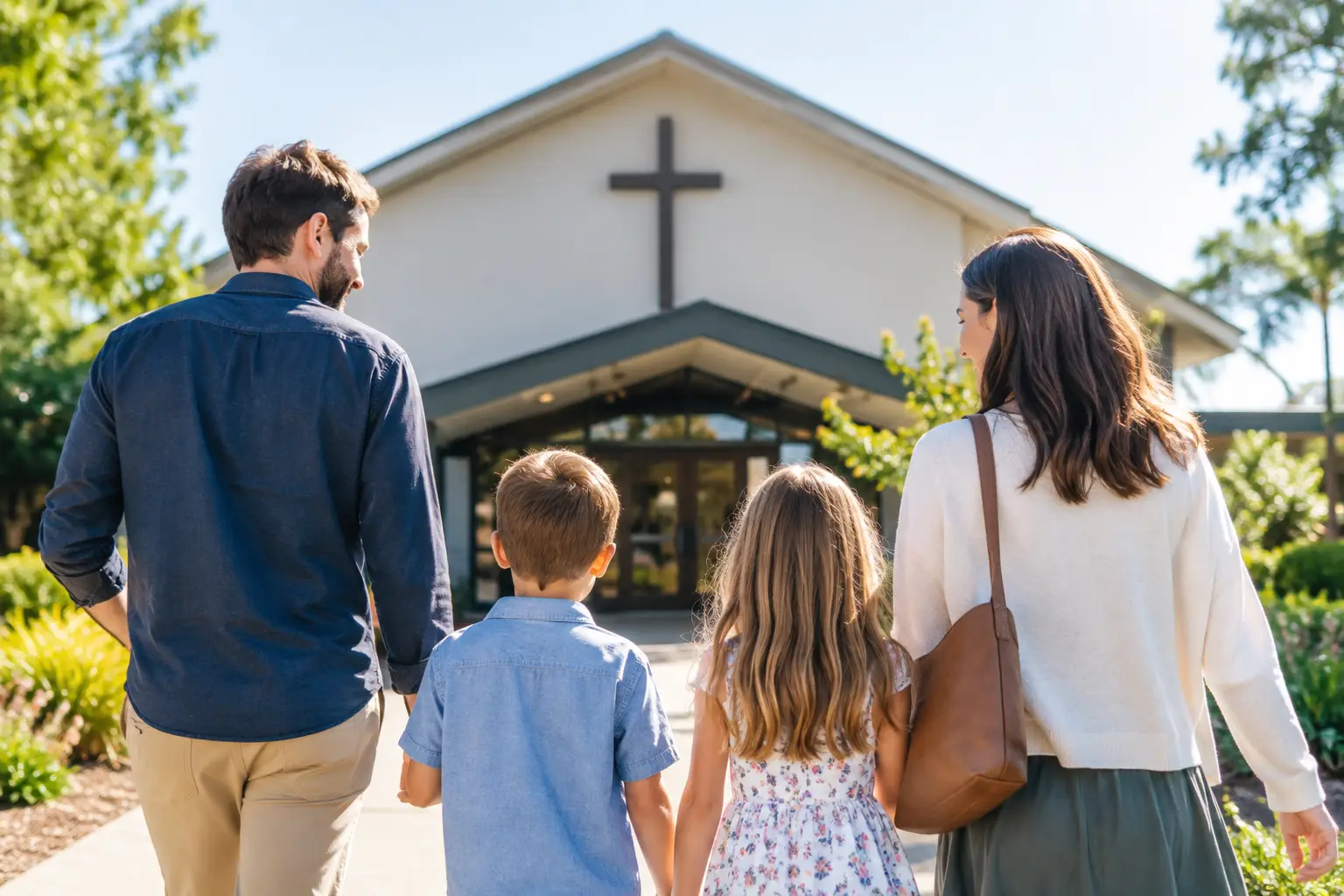

A Christian gathering is more than a familiar appointment in the week. For those asking, why do Christians gather weekly, the answer begins with God’s invitation into relationship. We gather because Jesus has made us his people, not because we are trying to earn a place with him. In worship, conversation, prayer and shared life, we are reminded that we belong to the Father, through the Son, in the fellowship of the Holy Spirit.
Weekly church life does not make anyone more loved by God. His grace is freely given in Christ. Yet gathering regularly gives that grace room to shape our habits, renew our hope and draw us into relationships where we can be known and encouraged.
Why Do Christians Gather Weekly?
The earliest Christians met together for teaching, fellowship, prayer and the breaking of bread. They recognised that faith in Jesus is personal, but it was never designed to be private. God forms a people. The New Testament often describes believers as a body, with Christ as its head. Each person matters, and each person has a place.
A weekly rhythm helps keep this shared identity visible. Life can become crowded quickly with work, commitments, travel, household tasks and worries that follow us through the week. Setting aside time with other believers is a gentle but meaningful way of saying that Jesus is at the centre of our lives. It reorients us towards what is true when many other voices compete for our attention.
This rhythm need not be approached with pressure or performance. Seasons of illness, caring responsibilities, shift work, distance and personal hardship can make attendance difficult. God is not absent in those seasons. A loving church community will seek to stay connected, pray and offer practical care rather than measure someone’s faith by a record of attendance. Still, whenever we are able, gathering is a gift that helps us receive and share the life Christ gives.
Worship Turns Our Attention to God
Christian worship is our response to the goodness of God revealed in Jesus. Through songs, Scripture, prayer and communion, we remember who God is: Father, Son and Holy Spirit, united in love and drawing us into that love.
Worship also gives words to experiences we may struggle to carry alone. Some weeks we arrive grateful and full of energy. Other weeks we may be tired, uncertain or grieving. In a congregation, we do not have to pretend that every day feels the same. We can bring our whole selves before God. The prayers and songs of the church hold both joy and lament, praise and need.
This shared worship is different from simply consuming spiritual content on our own. A message or song heard at home may encourage us, and there can be real value in those resources. But when people gather, they participate together. We hear voices around us, offer peace, pray for one another and learn that faith is lived in a community of real people. God meets us personally, and he also meets us as his people.
Hearing the Word Together
Biblical teaching is another reason Christians gather. Scripture tells the story of God’s faithful love and points us again and again to Jesus. When it is read and explained in community, we learn not only what the Bible says but how it speaks into ordinary life: our relationships, decisions, disappointments, work and hopes.
No one follows Jesus by having every question resolved. A healthy church makes room for people who are learning, returning to faith or exploring Christianity for the first time. Teaching should invite trust in Christ and encourage mature discipleship, not create anxiety or superiority. It helps us see the gospel as good news for our actual lives.
Gathering also protects us from carrying the task of interpretation alone. We listen with the wider church, across generations and backgrounds, allowing Scripture to shape our assumptions. This is not about surrendering thoughtful questions. It is about receiving wisdom humbly, with a desire to grow in the grace and knowledge of Jesus.
Belonging Is Part of Discipleship
Many people first come to church looking for answers, but they often discover that they also need belonging. Christian community offers a place where people can be welcomed before they have everything sorted out. We are all recipients of grace.
Belonging does not mean every person has the same personality, story or perspective. It means our shared life is centred on Christ, who brings people together and teaches us to love one another. Over time, the ordinary moments matter: being greeted by name, sharing a cuppa after a service, hearing how someone’s week has been, praying when life is difficult, and celebrating signs of God’s faithfulness.
These relationships can become a steady source of encouragement. We need people who will remind us of hope when we lose sight of it, and who will rejoice with us when God answers prayer. We also need opportunities to encourage others. Church is not primarily an event we attend. It is a community in which we learn to give and receive love.
For a person visiting for the first time, this can feel daunting. It is okay to arrive quietly, observe, ask questions and take time. Christian hospitality is not about placing expectations on a newcomer. It is about making space, listening well and reflecting the welcome we have received from Christ.
Gathering Forms Us for Everyday Life
The purpose of weekly worship is not to create a separate spiritual hour that has little connection to Monday morning. We gather so that we can be sent into everyday life with faith, hope and love.
In a weekly gathering, Christians practise habits that gradually form us. We confess our need for God’s mercy. We hear words of grace. We pray for neighbours and communities. We give thanks. We receive teaching. We share in Christ’s table where it is offered. These practices shape our imagination, helping us recognise God’s presence in the places we already live and serve.
This formation often happens slowly. Someone may become more patient in a difficult relationship, more willing to forgive, more attentive to a neighbour in need or more confident in praying through a hard decision. These changes are not a project of self-improvement. They are fruit of the Holy Spirit at work in people who keep returning to Jesus together.
Weekly gathering also creates opportunities for service. Some welcome at the door, help with music, prepare a meal, visit someone who is unwell or serve in ways that are less visible. Every act of service can express the love of Christ. The church is strengthened when people recognise that their presence, gifts and care can bless others.
A Place to Meet Jesus Together
Christians do not gather because a building is sacred or because a weekly routine can save us. We gather because the risen Jesus calls people into communion with himself and with one another. He is present by the Holy Spirit among his people, meeting us in worship, Scripture, prayer, service and fellowship.
For some, a Sunday service is the natural weekly gathering. For others, a midweek gathering, smaller group or different meeting time may be more accessible. The particular pattern can vary between local churches and changing seasons of life. What matters is not ticking a box, but being connected to a community where Christ is honoured, grace is shared and people are helped to grow as his disciples.
If you are looking for a church community, you do not need to arrive with perfect faith or a polished story. Come as you are. Allow yourself time to listen, meet people and consider whether this is a place where you can grow in trust in Jesus and share life with others.
A weekly gathering can become a quiet anchor: a place to lift your eyes to God, receive his grace anew and remember that you are not walking the way of faith alone.