
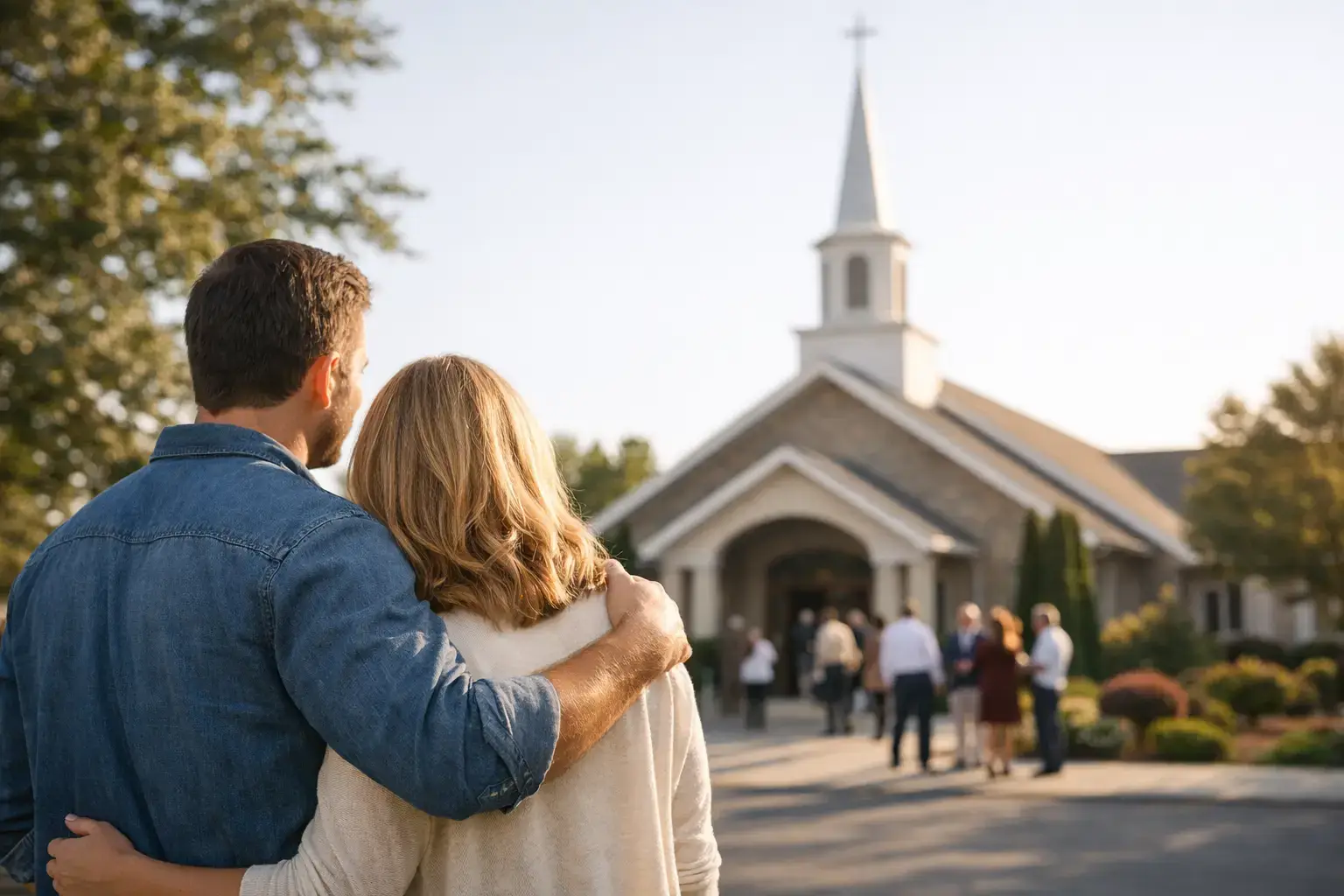
Some people know within one Sunday that a church feels like home. For others, the process is slower, with questions, hesitation and prayer along the way. If you are wondering how to choose a church home, that does not mean you are being fussy or faithless. It often means you take belonging, discipleship and worship seriously.
Choosing a church home is not only about finding a service you enjoy. It is about finding a local Christian community where you can grow in Christ, be known by others, share in worship, and learn to live the gospel in everyday life. A healthy church home will not be perfect, but it should help you see Jesus more clearly and follow him more faithfully.
Why choosing a church home matters
A church is more than a place to attend. In Scripture, the church is a people gathered in Christ – worshipping, praying, learning, serving and encouraging one another. When we ask, What is a Christian church community? the answer is not mainly about a building or a programme. It is about life together in Jesus.
That is why this decision matters. The church home you choose will shape your worship, your friendships, your understanding of the Bible and your spiritual growth over time. If you have children, it will also shape the patterns of faith they see lived out. Even if you live alone or are returning to church after many years, your local church life and worship will influence your sense of belonging and hope.
At the same time, it helps to stay grounded. No congregation will meet every preference. Styles differ. Personalities differ. Seasons of church life differ. The deeper question is whether a church is centred on Christ and committed to helping people grow as his disciples.
How to choose a church home with wisdom and prayer
The first step is prayer. Ask God for discernment, peace and humility. Sometimes we begin the search with a fixed idea of what we want, and there is nothing wrong with having hopes or practical needs. Yet prayer helps us listen as well as evaluate. It opens us to the leading of the Holy Spirit and reminds us that choosing a church home is a spiritual decision, not only a personal one.
It can also help to name what matters most. Are you looking for biblical teaching that is clear and faithful? Are you hoping to find a community where people genuinely care for one another? Do you need a congregation where worship, prayer and pastoral presence are part of ordinary church life? Those are not superficial concerns. They are part of what helps a church become a place of belonging, discipleship and spiritual growth.
Look for a grace-centred Christian faith
One of the clearest signs of a healthy church is the way it speaks about God, grace and the gospel. A church home should consistently point people to Jesus Christ – not to pressure, performance or religious image. You are looking for a community where grace is not treated as a slogan, but as the living reality of God’s love and saving work.
In practice, that means listening carefully to what is taught and how it is taught. Is the Bible handled with reverence and clarity? Is the good news of Jesus central? Is there a tone of mercy, truth and hope? A grace-centred Christian faith does not ignore repentance or discipleship, but it places them within the larger story of God’s faithfulness and love.
For many believers, doctrinal clarity matters as well. A church should be able to speak plainly about who God is and what Christians believe. A Trinitarian understanding of God is especially important because it shapes worship, prayer and the whole life of the church. When a congregation knows the Father through the Son in the Holy Spirit, the Christian life is not reduced to rules or vague spirituality. It becomes personal, relational and deeply rooted in the life of God.
Pay attention to the life of the community
A church may have sound teaching, yet still feel distant or closed off. That is why it is wise to notice not only what is said from the front, but what happens among the people. Is there Christian hospitality and service? Do people make space for newcomers? Is there warmth without pressure?
Not every congregation expresses welcome in the same way. Some are naturally lively and conversational. Others are quieter and more reserved. Neither style is automatically better. The key question is whether love is visible in ordinary ways – through kindness, prayer, attentiveness and genuine care.
A church home should also make room for real discipleship. That includes worship gatherings, but it usually extends beyond Sunday. Healthy church community often involves prayer with others, opportunities to learn Scripture, pastoral support in difficult seasons, and practical ways to serve. Faith grows best where people are invited not only to attend, but to belong.
Visit more than once
If possible, resist the urge to make a quick decision after one visit, whether positive or negative. One Sunday can tell you something, but not everything. People may be away. The message may focus on a topic that is not typical. You may be unusually tired, anxious or distracted.
Visiting more than once gives you a fuller picture of local church life and worship. It allows you to notice patterns. Is Christ consistently central? Do the prayers sound thoughtful and sincere? Does the church seem grounded in Scripture? Is there a spirit of peace and openness? Over time, first impressions become clearer.
This is also where patience matters. Some people are searching while carrying disappointment from a previous church experience. Others are exploring Christianity for the first time and feel unsure of what to look for. You do not need to rush. It is all right to take time, ask questions and seek the Lord as you go.
Ask simple, honest questions
You do not need to approach the process like an investigator, but thoughtful questions can be helpful. You might ask about the church’s beliefs, the rhythm of worship, opportunities for fellowship, or how people are supported in prayer and discipleship. The goal is not to test people harshly. It is to understand whether the church’s life aligns with the gospel it proclaims.
It can also be helpful to ask yourself a few honest questions after visiting. Did this church help me turn my attention to Jesus? Could I imagine growing here over time? Is there a spirit of grace and truth? Can I see space for worship, service and spiritual maturity here?
Sometimes the answer will be yes, but gradually. Sometimes it will be no, and that is all right too. Not every good church will be the right church home for every person or family.
Notice whether faith connects with everyday life
A healthy church home does more than offer a weekly event. It helps people follow Jesus in ordinary life – at home, at work, in relationships, in seasons of joy and in seasons of strain. Faith, hope, and everyday life belong together.
That does not mean every sermon must be highly practical in a narrow sense. Some weeks a church may focus on doctrine, worship or prayer. Yet over time, a faithful congregation will help people grow into a lived trust in Christ. It will encourage prayerful dependence, compassionate service and steady hope in the middle of real life.
This matters because many people searching for a church are not looking for performance or polish. They are looking for a spiritually grounded place where the gospel shapes real people. A church home should help you become not only more informed, but more formed in the likeness of Jesus.
A church home is a place to receive and to give
When deciding how to choose a church home, it is natural to think about what you need. That is right and good. We all need sound teaching, worship, fellowship and care. Yet part of Christian maturity is also asking how we might participate in the life of the body.
A church home is a place where you are loved, but also a place where you learn to love others. It is where you receive encouragement, and where you begin to encourage. It is where you are served, and where Christian hospitality and service become part of your own discipleship.
That perspective can shift the whole process. Instead of asking only, Does this church suit me? you may begin asking, Is this a community where I can grow in Christ with others? In many cases, that is where clarity starts to come.
If you are seeking a church home in Australia, you may find that congregations such as Grace Communion International Australia aim to hold together biblical clarity, grace-filled community and a warm pastoral welcome. Even so, the best next step is often simple: pray, visit, listen and allow time for trust to grow.
A good church home will not ask you to pretend you have it all together. It will invite you to come as you are, to worship Jesus in the company of his people, and to keep growing in faith, hope and love.