
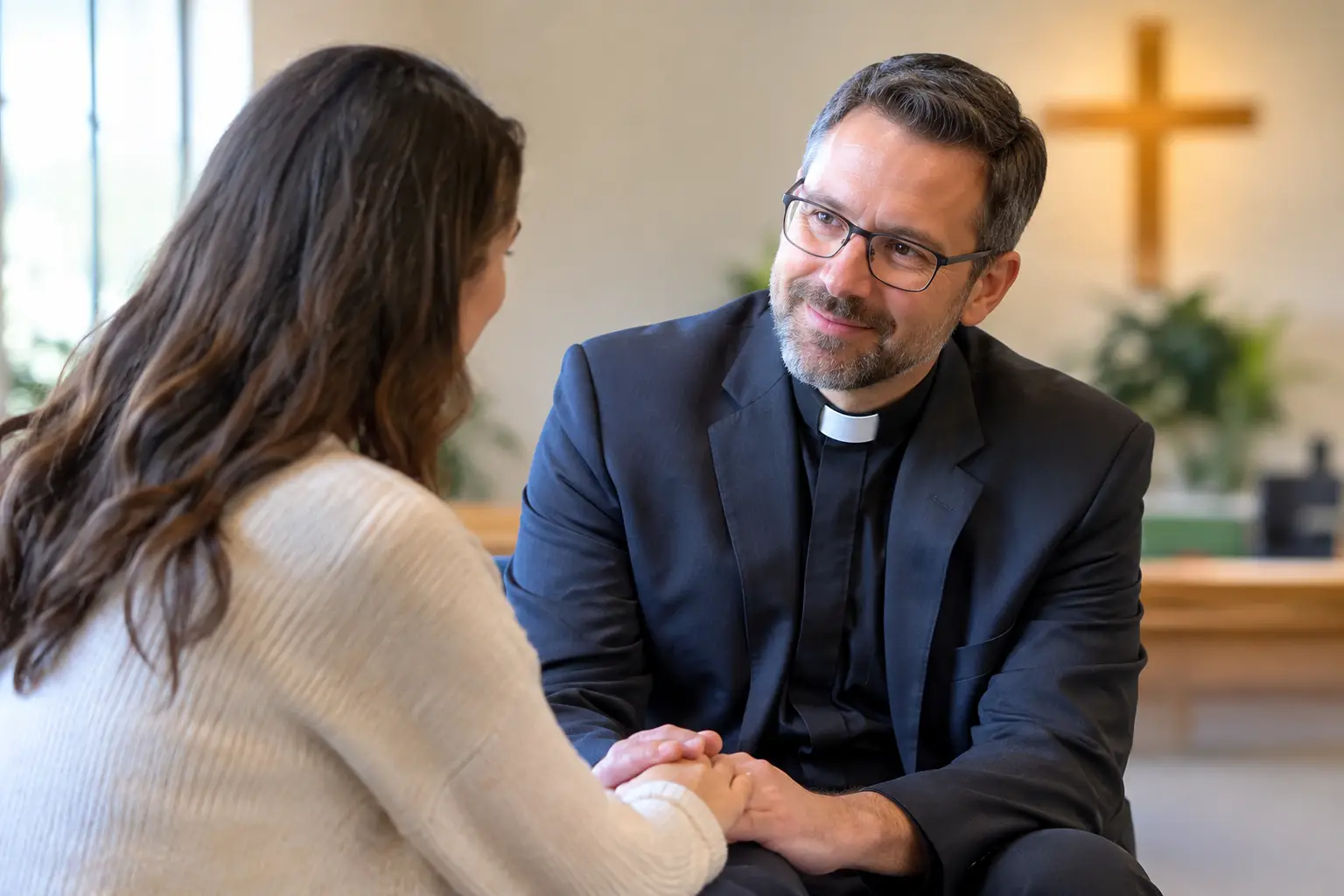
There are seasons when attending a service is not enough. We may be carrying questions about faith, facing a difficult decision, longing to pray with someone, or simply hoping to be known rather than lost in a crowd. A Christian church with pastoral support offers more than a place to visit on a Sunday. It is a community where people can encounter the grace of God, grow in trust in Jesus, and receive caring encouragement along the way.
Pastoral support is not reserved for moments of crisis. It belongs to the ordinary life of the church: worshipping together, opening Scripture, sharing prayer, serving one another, and learning to follow Christ in everyday life. It reflects the heart of Jesus, our Good Shepherd, who knows his people and leads them in love.
What pastoral support means in a Christian church
Pastoral care begins with relationship. It is the prayerful, attentive presence of leaders and fellow believers who seek to point people towards Christ. Sometimes this may involve a conversation after a gathering, a visit, prayer during a time of need, or guidance as someone takes a next step in faith. Often, it is expressed quietly through consistent welcome, practical kindness and the assurance that no one has to walk alone.
Healthy pastoral support does not make leaders the centre of a person’s faith. Its purpose is to help each person know and trust Jesus more deeply. Pastors and ministry leaders can listen, teach, pray and offer wise spiritual encouragement, while the whole congregation shares in caring for one another as brothers and sisters in Christ.
This care also has appropriate boundaries. A church can offer prayer, friendship and spiritual guidance, but some circumstances may require specialist medical, counselling or community support. Seeking such help is not a failure of faith. In a caring church community, people can be supported with dignity while taking wise steps towards the help they need.
A grace-centred place to belong
Many people looking for a church home are not looking for perfection. They are looking for a community that is honest about life and confident in God’s grace. Grace-centred Christian faith begins with the good news that God has drawn near to us in Jesus Christ. We are welcomed not because we have earned a place, but because of God’s love.
That welcome shapes the way a congregation treats people. It makes room for those who have been part of church for many years, those returning after time away, and those exploring Christian faith for the first time. Questions can be asked. Faith can grow steadily. People can learn without pretending to have everything sorted.
A church community will still have convictions, teaching and a shared way of life. Grace is not vague or impersonal. It calls us into a truthful relationship with God and one another. Yet it gives us confidence that spiritual growth is the work of the Holy Spirit, not a performance to be managed.
Worship that forms us in hope
Gathered worship is one of the clearest expressions of local church life. As people sing, pray, hear the Bible read and share in fellowship, they are reminded that they belong to God and to one another. Worship reorients us when the week has been busy, uncertain or heavy.
The value of worship is not measured only by a particular style. Some congregations may be small and familiar; others may have a larger gathering. What matters is whether worship directs our attention to Jesus, makes space for prayer, and invites people to respond to God with faith and gratitude.
The Trinitarian shape of Christian community
A Christian understanding of God is deeply relational. Christians worship the Father, the Son and the Holy Spirit – one God, known in loving communion. This Trinitarian understanding of God is not merely an idea for a theology book. It shapes the life of the church.
Because God is love, Christian community is called to reflect that love through welcome, humility, faithfulness and service. Jesus brings us into relationship with the Father, and the Holy Spirit unites and equips God’s people. We do not gather merely around shared preferences or similar backgrounds. We gather because, in Christ, God has made us his people.
This gives pastoral support its proper foundation. Care is not simply being nice, although kindness matters greatly. It is a response to God’s gracious care for us. As we receive his love, we learn to listen with patience, bear one another’s burdens and speak hope when life feels uncertain.
How discipleship grows through everyday connection
Discipleship is the lifelong process of becoming more like Jesus. It happens through biblical teaching and personal prayer, but it is also formed in ordinary relationships. A conversation about Sunday’s message, a shared meal, a prayer before a difficult week, or serving alongside others can all become places where faith takes root.
For this reason, a church with meaningful pastoral support will usually offer more than a weekly service. There may be opportunities for smaller gatherings, prayer, Bible reflection and service in the local community. The exact shape will differ from congregation to congregation. A smaller church may offer close familiarity and simple connection, while a larger church may provide a wider range of ministries. Neither is automatically better. The helpful question is whether people are being drawn into genuine belonging and growing as followers of Jesus.
Discipleship also includes learning to bring faith into daily life. The hope we receive in worship can shape how we approach work, relationships, decisions and times of pressure. Christian community does not remove every hardship, but it reminds us that Christ is present and that we are not left to face life by ourselves.
What to look for when visiting a church
If you are considering a local congregation, allow yourself time to notice its life rather than judging everything from one first impression. A warm greeting is encouraging, but lasting welcome is seen in whether people make room for relationship over time.
Listen for teaching that is grounded in Scripture and centred on Jesus. Notice whether prayer is woven naturally into the community’s life, and whether there is a spirit of grace, humility and hope. Consider whether leaders are accessible in an appropriate way and whether the congregation encourages people to care for one another rather than leaving all ministry to a few individuals.
It can also help to ask simple, direct questions. How can someone receive prayer? Are there opportunities to grow in discipleship? Who can help a newcomer become connected? What does the church value in its worship and service? A healthy congregation should welcome these questions and respond with clarity and kindness.
For some, the first step may simply be attending a gathering and staying for a conversation afterwards. For others, it may mean contacting a local church before visiting or asking to meet a pastor. Grace Communion International Australia seeks to provide congregations where people can worship, belong and grow in a Christ-centred community.
Christian hospitality and service
Pastoral care becomes visible when a congregation practises hospitality. Hospitality is more than being friendly at the door. It is making room for people, paying attention to those who may feel uncertain, and treating each person as someone deeply valued by God.
Service is another expression of this shared life. As people use their gifts to encourage, welcome, pray, teach and help, the church becomes a living witness to Christ’s love. Serving does not need to be impressive to be meaningful. Faithful acts of care often carry more weight than public recognition.
No church community will do this perfectly. Every congregation is made up of people who are still growing in grace. But a healthy church will keep returning to Jesus, receiving his mercy and allowing that mercy to shape its relationships.
If you are seeking a Christian church with pastoral support, look for a place where the gospel is heard, prayer is practised, people are welcomed and discipleship is patiently encouraged. The right community may not answer every question immediately. Yet it can become a place where, together with others, you learn again and again that Jesus is faithful, present and able to lead you forward in hope.